
Facebook Home Opens Up Mobile Ad Targeting Opportunities, And Other Marketing Stories Of The Week

20130414-224205.jpg

Mobile advertising has been a hot topic lately. In fact, we’ve seen a number of online platforms invest heavily in mobile as a way to monetize their businesses and leverage the popularity of mobile adoption among users. And with this influx of mobile marketing opportunities, companies like you and me have benefited from more effective ways to target their mobile audiences based on all the data at their fingertips.

One major online platform in particular may have recently created the Holy Grail for mobile marketing. Think you know who we’re talking about? Read on to learn more, and find out what other inbound marketing stories may have flown under your radar this week.

Facebook ‘Home’ Will Be Great for Ad Data, But Bad for Brand and Media Apps, From Adweek
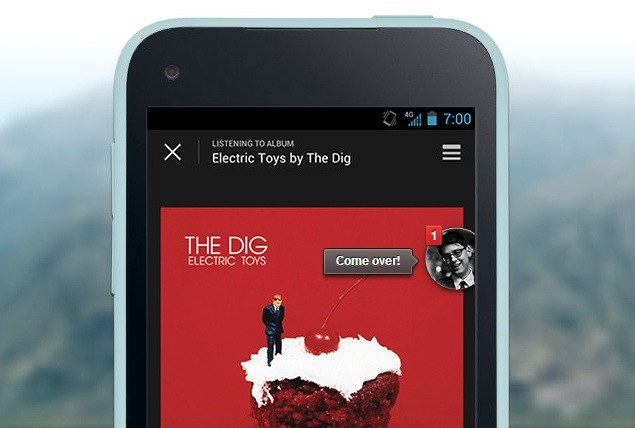
Many of you are probably well aware that Facebook recently launched Facebook Home, its new home screen replacement for Android devices, which Facebook describes as “a family of apps that puts your friends at the heart of your phone.” The downloadable system allows Android users to customize their home screens with multiple features like cover feeds, chat avatars, and notifications about calls, events, Facebook updates, and other apps. Through its App Launcher, Facebook Home also includes apps such as Instagram and Facebook Messenger, along with other third-party apps to complete the user experience.

Okay, so what does this mean for mobile marketers? Well, according to Adweek, it means that Facebook Home will bring advertising on mobile app networks to a whole new level. With Facebook’s apps, notifications, and features taking up the homepage, Adweek speculates that it could affect how brands outside Facebook reach their mobile audiences. Aside from hindering other brands’ mobile efforts, Facebook Home will be able to consistently gather user data and open up opportunities for highly targeted ads. This ad targeting could take into account user behavior through interactions in chats, messages, status updates, photos, and location checkins, among other things. Learn more about what Facebook Home means for mobile advertisers over at Adweek.
20130414-224151.jpg

Twitter Already Shut Down Ribbon’s Newly Launched In-Stream Payments Feature, From TechCrunch

In less than 48 hours, Twitter has already pulled the plug on what seemed like a promising new payment method for purchasing products through Twitter streams. The service, known as Ribbon, would allow users to click a button directly within a tweet in order to make a purchase without having to leave Twitter.com. There are speculations that Ribbon used Twitter Cards to set up the one-click purchase method that may have violated Twitter’s Terms of Service.

Although this service didn’t make it too far out the gate, it does show that companies are considering payment options that can drastically increase conversion rates for businesses. Allowing users to purchase items without ever leaving their Twitter streams opens up the potential to convert tons of leads into customers without additional landing pages or steps. Read more at TechCrunch.

20130414-223938.jpg

Looking For Incredible Handmade Furniture …. Look At Our Dining Room Table .. Love

20130414-223233.jpg

Looking for something simply stunning… We searched high and low (Velds & Provinces) and then realised our friend makes incredible furniture that’s really affordable.email me jbayvel@yahoo.com for his details.

Tech Investors Should Take Note – The Female Consumer Is Changing Her Online Behavior

20130401-234653.jpg

By now we all know the power of the online female consumer. She propelled Pinterest to lofty, billion dollar heights, she is the dominant user on Facebook, and she drives the conversation on Twitter.

The female consumer is the decision maker behind a whopping 85% of all brand purchases. In fact, her spending habits propelled Pinterest to deploy an analytics platform this week meant to leverage the buying power of users for the companies that covet those dollars. However, a recently spotted trend amongst the female consumer base may indicate that social media is still rapidly changing, and that more focused, niche networks will see greater engagement in the future.

According to research recently released by KCR Research, nearly four in 10 North American women (38%) have decreased or stopped their usage of one or more social networks during the past six months. (See Infographic)

“We believe that these findings reflect the importance of time management in women’s lives and their empowerment to control what networks provide them with the most personal ROI.” Says Marcy Massura, Director of Digital Engagement at Weber Shandwick. “As women become even more efficient in how they manage their busy lives, they will increasingly apply those skills to their social networks. The churn that our study identified seems to indicate a preference to ‘go deep’ in fewer platforms, versus being spread thin over many.”

Prior to the rise of Pinterest, a number of web 1.0 social networking sites had successfully grabbed the interest of women. Sites like CafeMom and iVillage generated massive page views through an engaged audience that was looking for ways to connect with other women on topic specific discussions.

More recently, women have quickly and widely adopted the Web 2.0/social media sites that allow users to create and aggregate their content. However, these large, flat platforms do not necessarily lend themselves to a focused use.

Women do not have a lot of time. The time they spend online needs to be both entertaining and useful. For the large platforms such as Pinterest this means upstart sites like Lover.ly (where users collect and share wedding visuals) are a serious potential threat.

“Niche sites offer value to a woman in ways more general platforms may not,” adds Massura. “Since the niche platforms generally come with a specific theme or topic, she is free to engage deeply and frequently on one of her prime interests. What is important to her is that the quality of engagement can be more personal on niche sites and even message board communities than what she may get on more public broad-sweeping platforms. She can also confine her time to a topic she cares about instead of weeding through more extraneous commentary. From a marketing standpoint, smaller community sites offer wonderful opportunities to connect with her in more meaningful ways.”

While industry reports of teens pulling back from their Facebook engagement have been widely reported, they are perhaps not as alarming as the fact that the people who hold the purse strings of economic growth are narrowing their online focus. For tech investors hoping to stumble onto a young site with potential for both user base growth and legitimate possibilities for income stream generation, it seems as though tracking women’s online activities would be priority number one. But, sadly, except for a very few, it is not.

Find that hard to believe? Ask the Pinterest team, who pitched to many potential investors and found no interest early on in their lifecycle, even though the site had an established, engaged user base right from the start. Or, ask the team at The Muse, who recently shared their difficulties in raising funding for a site that is focused on a female user base, and also had very solid engagement numbers early on.